Search This Blog

Showing posts with label sacrifice. Show all posts

Monday, May 13, 2013

Why Does a Good God let Bad Things Happen?

In my last blog post about I answered a question from a friend about why I believed in God. I then expanded that to explain why I believed Jesus is that God. A comment was left on that blog that goes like this:

 A lot of people have asked me not why is there so much evil in the world, but why is God letting it happen? Why is He letting people suffer? What would your response to that be? I can answer it but it seems a very uncompassionate answer. One thing I suddenly think of is what you moved on to talking about - Jesus. Before Jesus, God seemed to mostly worry about what the Israelites were doing, as the people of God. But when Jesus came, God in human form, he started to heal people and talk them through stuff in a way I don't think God had so much, BC. It was the human that went out and started the process of 'healing the world' and giving that example of what we should be doing.So it appears to be our duty to be the change we wish to see in the world (together with others).
I still don't get where cancer comes from, though. It doesn't make enough sense that 'God is with us through the suffering'. It's almost like a parent saying, 'oh whoops, you got hit by a car and got paralysed. But it's okay, cos I'll sit with you in hospital'. 
I am kind of thinking that one's faith cannot be based on knowledge alone, but as you say, a personal encounter with Christ, which cannot be scientifically proven, or completely falsified, because it is each person's experience. Even when people have experienced miracles, others will not believe because, well, maybe because those miracles have not happened to them. Maybe their friend died of cancer. Maybe they themselves still haven't been healed. Sorry about the rant but I am putting stuff out there that probably lots of people are thinking. The kind of questions that don't go away..

There are so many things I want to respond to in this comment that it took me a couple of days to get my head in order! First off, thank you for leaving this post and asking the questions that are difficult and that Christians and non-Christians alike struggle with. The problem of suffering is a HUGE issue that often we are too afraid to speak about in case we sound stupid or whiny or because we are afraid that the answers (or lack thereof) will hurt our faith. So thank you for your bravery and you 'rant' haha.

Secondly, I think the only way I am gonna be able to tackle this is to state from the get go that there is a lot about God that I don't know (shock! haha) and that anything I say are my opinions and not necessarily the Truth about the situation. I have only my biblical study, my opinions, my experiences, and my community to draw on. These are big questions that I more than likely will not resolve but maybe I will help add to the discussion, clarify it, or even just point people in the direction of where to look to wrestle with these sorts of things. In other words, this blog post is not going to attempt to solve the issue of suffering in the world, and I am ok with that.

So I am gonna break this down into sections with what I believe are the big issues being talked about here. If I have read this wrong please feel free to redefine and get me to answer the actual question :p

Ok, here it goes.

I see three big topics in this comment:

1) Why does God allow suffering to happen?
2) What is the relation of the OT to the NT in terms of suffering in the world?
3) What is the role of Christians in the face of the suffering we see? How do we respond to it?

1) Why does God allow suffering to happen?

In order to answer this question I actually want to start with the second one. So...

2) What is the relation of the OT to the NT in terms of suffering in the world?

The reason I want to start with this question is because the only way we know the truth about who God is and how God acts is through Scripture. It's the starting point from where we can judge all experiences of God in our lives, or the theology we are taught in churches, and figure out what is God and what is not by seeing if it is compatible with the God in the Bible. For example, if someone says "God told me to steal that person's wallet", chances are God didn't actually tell them that because we know that God in the Bible was really against people stealing. Comprende? 

So by looking at the OT and the NT we should be able to answer question 1) a little better (hopefully....fingers crossed).

It is true that in the OT God seems a little preoccupied with Israel as opposed to the rest of the world. Remember that these books were written by Israelis for Israelis about Israel and Israel's God. They aren't gonna talk a lot about the rest of the world. BUT, in amongst this history of a chosen people, there are whole sections dedicated to people who weren't part of Israel and yet are called Godly people and are seen as saved by God!!! This is pretty mind blowing that they were included in the story of a people who thought God's salvation was for Israel alone!

Let's start with Abraham. He is what we call a pagan (a worshipper of many manmade gods) when God calls him and tells him to go to a 'land which I will show you'. So Abraham (at this point called Abram) goes. Talk about a leap of faith! Leaving everything you know to follow a God you have never heard of and can't see! Like Noah before him, Abraham was seen a a solo righteous man among many unrighteous men. Noah and Abraham were both called and they both followed. Both are really messed up!! Noah gets drunk and naked one night after the flood, and Abraham lies about his wife (calling her his sister) in order to save his own life. Not exactly perfect men but God still used them.

Abraham meets a man called Melchizedek on his travels. This man is outside of the covenant God formed with Abraham, so he isn't part of the nation that will spread God's word. He appears from nowhere, no history of him, and is called the King of Salem (translated as the King of Peace). He is recognised by Abraham as a righteous man and yet not part of the 'elect'.

Jonah is sent to Ninevah, the ENEMIES of Israel who God said were outside the elect people of Israel, and God saves their lives because the repent!

Job is not from Israel, he is not a Jew. Yet a whole book is given over to him as a holy man who God cares about. He suffers greatly and dares to address God and God ANSWERS him. Trust me, in Hebrew literature for God to answer a pagan is a flippin big deal.

When the Jews leave Egypt they also take with them, as part of their number, Egyptians who wished to follow them and they become part of Israel when the land is given to the Jews. So does Rahab, a Moabite prostitute, and Ruth, a Moabite pagan. Both these women are great, great, great....grandmothers of Jesus.

What I am trying to get at here is that God in the OT wasn't just concerned with Israel. Through Israel God is forming a great plan (Jesus) that will save the world, but in the mean time he is also working outside of Israel to save the world also. Jesus acts in the same way. He purposely shows up the Jewish religious leaders by acting in a way that says "God cared about these people, the people you rejected, and always has. It is YOU that has read the text wrong, not God asking you to reject them".

In this the OT and the NT line up. God doesn't act differently. In both he is concerned with the care for the poor, alien, widowed etc (check out the laws in Leviticus, there are heaps of these). God is not only focused on Israel. They are a people that he is making in order to send his Son, but he is at work with love and concern for those not in Israel too.

I hope that answers this question.

That said, let's go back to number 1.

1) Why does God allow suffering to happen?

I think I need to clarify three different forms of suffering here. There is suffering from natural causes (earthquakes, tsunamis etc), there is suffering at the hands of others (rape, child abuse, name calling), and there is suffering through illness.

Suffering at the hands of others is the easiest to answer. In these cases God has given everyone the free will to act as they chose. Though this means that we will all act in a bad way at some point in our lives, some people will chose to act in a way that is purposely harmful to others. It is their choice. It sucks for the person who is at the hands of perpetrator (and as a sexual abuse survivor, I know what I am talking about) but God has chosen, out of love for us, to let us make our choices, even when they hurt others.

Now I know people out there are gonna say "but why doesn't he stop them? What if they are hurting a child?" I get that, I really do. Nothing makes my blood boil like child abuse and I would quite willing castrate anyone who lays a hand on anyone else in violence. But if we would let God take away free will there, when do we say stop? What about stealing? Cheating? Lying to your parents? When does intervention actually start meaning no free will and we become robots made to serve God, instead of people who can chose to love him? When is it ok for God to intervene and it not ok? As someone who has been through it I would say God did intervene in the fact that he gave me a choice to either live on in anger, or to give it to him and learn to forgive. He didn't have to do that. 

Suffering from natural causes is a little harder. The bible tells us in Romans (I think chapter 6?) that the earth is groaning with birthing pangs. In other words, when death entered this world it didn't just affect us, it affected the whole of creation. Everything started breaking down. Global warming is an example of where things are breaking down and it is from our choices. We haven't treated this planet well and it is feeling the affects. And when laws of nature come into affect then these things are going to start affecting at least some of the millions of people who live on this planet. It sucks. It is awful and sad to watch it happen. But God created this world to work with certain natural laws. Unfortunately, those laws work really well and cause catastrophes at times. 

Illness is the one that gets me every time. I don't know why God doesn't heal everyone. I don't know why Jesus at times heals everyone who comes to him and then the next day it is only a few. I don't why I was healed and others haven't been. It can make me angry, thinking of the people I know who get sick, and it makes me feel survivors guilt that I escaped and others have died from their illnesses. Perhaps it has to do with choices (ie lung cancer from smoking) and to do with creation breaking down and our bodies going all wrong. 

But what I do know is that in the face of all this suffering God has said "this ISN'T it!" He sent Jesus to die for us and to rise again to show us that this life isn't just "life's a bitch and then you die." There is healing to be found, if not in this life then in the next. There will be miracles for all who believe. That when a friend dies of cancer we can grieve but also be glad that they are free from their suffering and made whole with Jesus. There is HOPE. And that is a wonderful thing. Because God will heal everyone, and he will stop all natural disasters, and we will live without fear of what others can do for us. So God HAS done something about suffering, he HAS intervened. It is just not on our timeline.

And this leads to,

3) What is the role of Christians in the face of the suffering we see? How do we respond to it?

We are to tell others that this isn't it! That there is hope. That they don't have to only experience life this way. We are to sit with them and grieve with them and pray with them and hold them. And we are to love them as people who are worthy of love, people who are worthy of attention. We don't ignore them like the rest of society does. We aren't to put sick and suffering people away where we can't see them. We are to embrace them as children of God and invite them into seeing themselves that way. Because we love them we will want them to know the truth, that God has intervened, that he has a time limit for suffering and one day it will be finished. That this life with these broken bodies in this broken world is not forever but life and joy can be. 

We are to live in such a way that we point them to the one that will heal their suffering and give them peace.

That is my hope. 

That is my joy. 

I am honoured to share it with you.

Wednesday, April 10, 2013

OBEY ME!

I don't know about you but the idea of obeying someone really grinds my gears.

I hate, HATE, the idea of having to take orders from someone. There are always times that it comes into play, like if you are a student you obey the teacher. But even then you can choose not to and fail your courses if you want to I guess.

It's the idea of someone telling you how to live, where to go and what to do that really gets to me. This feeds into my desire to be the CEO and not the worker of any business I work in. I want to be the boss, I want to dish out the orders, I don't want to take them!

And I know that this isn't a unique trait to me. It seems to be a major problem with everyone in Gen iY (the next generation after Gen Y). I am a Gen Y'er but can totally relate to this desire to control my own destiny and not listen to anyone else who may tell me what to do.

Typical traits my fellow control freaks are disrespecting of parents wishes, knowing more than the teacher about what is good for me, not paying any attention to government or the laws that they might set, ignoring how annoying my music may be to my next-door neighbours/fellow passengers on the bus/anyone in the general vicinity.

(Random aside: why do people listen to music on public transport on speakers instead of headphones??!!! Do they really think that everyone else wants to listen to the latest rap/dance/hiphop/pop that they are into?! Come on people, they are PERSONAL sound systems!!)

But getting on with the topic....

Recently my amazing father-in-law bought my hubby and I our first car. Problem is it is still four weeks until I sit my license so I am not actually allowed to drive the thing yet. I did anyway. For the first two days of owning the car I threw the rule book out the window and experience freedom. 

Then Luke had a crisis of conscience and told me that we really shouldn't drive anymore illegally. Apparently breaking the law is bad. Apparently God isn't really for that either.

Kill joy.

The thing is I agree with Luke (and God) and I shouldn't be driving illegally and would have a fit if anyone of my friends did it. The thing that pissed me off was that someone, in the case the LAW, told me not to.

I have serious authority issues.

I usually don't bring it up at job interviews.

So I got to thinking:

What is it about obeying that annoys me so much?


And it's not just me! I know that YOU (yes you, reading this right now) have moments where obeying isn't exactly your forte. I know that there have been times when you have thrown the rule book out the window too. Maybe you didn't drive illegally, maybe it was eating more sweets than your mum said you could. But there was a time when you didn't want to, and didn't obey.

So if you are a Christian how does this rebellious nature work when we are dealing with all matters Godly?

This desire to not obey, to be in control, is the BIGGEST issue that separates us from God! Back in the Garden of Eden (whether it was metaphorical or not) the issue was that humanity not only wanted to disobey  God, but they wanted to BE God. To call the shots. That's why the serpent says to Eve "nah, you won't die you'll just be as smart
as God and know everything" (CSW (Christine Susan Welten) translation)

The tower of Babel was about people wanting to be God, to control the world. Abraham gets Hagar, instead of Sarah, pregnant because he tries to control how a prophecy will be fulfilled. Saul gets kicked out of being the king because he does all the sacrificial stuff himself instead of waiting like God had told him. Israel as a country repeatedly refuses to obey God and ends up in exile with the Temple destroyed.

The Bible is FULL of people who couldn't find it in themselves to obey God. And these are people who saw God walking with them in the garden, as smoke on a mountain, as a pillar of fire, and angelic messengers. They had all this cool stuff happen and they still slipped in obeying.

It seems to be the major failure of humanity.

Only Jesus obeyed God 100% and even then he prays, that, if at all possible, what had to happen could be cancelled. 

So if we have this amazingly huge flaw that all of humanity suffers from, what the heck are we suppose to do about it??

Well, I don't know.


Truly.

I think that it is about prayer.

It is through talking to God, admitting our failures and our desire to control (and how badly we do it!), and saying "I want you to be in charge" that we learn to actually let God be in charge.

Even praying that we want God to be in charge in a sense is obedience. We are obeying the command to pick up our cross and follow Jesus. We are saying in effect "I don't know how to do this, but I am trying." We are letting God in and giving him the authority to start changing our hearts.

It is about listening.

In prayer we start to learn to hear God's voice instead of just our own. It takes time and practice to know God's voice in amongst all the other noises in our world and prayer is massive in being part of us being able to hear it.

If we are listening well to God then we will feel when there is a conviction for us to change something. We begin to hear and recognise the call to do something, go somewhere, help somebody. And we learn to respond with "YES" when we hear it. We begin to obey the voice of God as we learn to listen for it.

It is about talking.

We aren't meant to do life alone. Obeying stuff can be hard, particularly when it seems to be inbuilt into us to disobey. 

So we need to talk to each other about our struggles and failings. We need to be honest about the things we find hard to give up or start. We need to pray with each other and for each other so that we can draw on the strength of the community when we are doing something that we know we shouldn't but we don't want to stop.

It is about reading.

We NEED to read the Bible. We need to do this so we can know how God works, how God speaks, and what God says. We need to read it so we can learn what God's voice might sound like and when we have got it really really wrong. Because we don't always get it right and sometimes what we feel is right is actually not what is right.

Praying, listening, talking, reading.

Doesn't sound so hard, but it is.

But when we start doing these things we will start to see our lives change for the better. We learn to love God and others more, we become more humble and accepting of life and the rules in it. We learn to respect people and the things that they say and enforce. 

In short, we become more like Christ.

"Not my will Father, but your be done."

Wednesday, March 13, 2013

Thesis Update - Halo, Skyrim, Heroes and Saints.


As you may be aware if you are reading this update, I am doing my Masters thesis on biblical ethics and gaming (see link here if you want the low down).


I love getting into reading and trying to take what people have already said and apply it to what I am thinking about. Yes, I am a nerd. I am doing a thesis on gaming!! I think NERD is really an understatement.


Anywho, I have been reading aaaalllloooooooooooot for this thesis already and am really interested by the ideas that are coming out. And as promised, I am going to share my musings with you lucky lucky people.

Got your snacks and beverages? Ok, let's get this thing underway.

A am currently totally in love with the work of one particular ethicists called Samuel Wells. Particularly his book called Improvisation: The Drama of Christian Ethics (which can be found here).

Mind blowing stuff I can tell you.

The overly simplified version of his argument is that "ethics presupposes context, and an understanding of context presupposes narrative; yet if context is to be understood as genuinely communal, and ethics as genuinely interactive, then narrative must be understood as drama." (59)

So what he is saying is that ethics needs to be for people in a time and place, and you only understand that time and place if you understand the story that brought the people to it. You with me? So if that time and place is for a community (not just an individual) and ethics is something we do (not just think about) then the narrative is not just a story that people tell, it is one that is lived out and one that ethics has an impact on.

You following still?

He goes on to argue that for ethics to really really engage with a community (in this circumstance a Christian community that uses the Bible as Scripture) then the Bible is not a text that we memorise and then act out, as a drama would imply. Rather, it is a story we immerse ourselves in to the point where we know it so well we can improvise while remaining faithful to the text, to God, and to our community.

Like I said, this dude blows my mind! Loving it!!!

So even though that in itself is an amazing concept, it is not what I want to look at today.


What I want to engage with is Wells' idea that secular ethics is looking for heroes, while Christian ethics is about making saints.


Bear with me, all will be revealed.....


.....now.


Well's talks about how Aristotle, the Father of ethics, talked about virtues as the way a character of a human should be, rather than ethics being about decisions we make in crisis situations.

Virtues = character.

He held up as the pinnacle of a person who had mastered the virtues the idea of the 'Hero'. The Hero is someone who is strong and brave. They protect the weak and use their strength for good. They rely on their own strength rather than on the weakness of others, and if the fail it is catastrophic for not only themselves but the people they are protecting. The best death would be one in battle, as it takes the most courage to go out and fight so to die this way would be exemplary. 

The Hero = Superman (Christopher Reeves style)

On the other hand you have Aquinas, one of the early church Fathers. He liked the idea of the virtues but he changed them around a bit and said that instead of heroes, the biblical values built Saints. The Saint is someone who is serving of others, filled with the fruits of the Spirit (love peace patience kindness etc), and the virtues help them to follow Christ. 

For the hero the story is about them. For the saint it is about God.

For the hero the story is about celebrating their strengths. For the saint it is about celebrating faith.

The hero will die fighting in inevitable conflict. The saint will die as a martyr because they refused to fight for they believe that Christ has already won.

Hero = Soldier

Saint = Martyr

So this got me to thinking:

What stories are games portraying? Who are they honouring, the saint or the hero? What are they teaching us is the better thing to be?

If you look at any game you can see that it is the Hero that is celebrated. You need to fight well, protect others, be strong and courageous. Death isn't really wanted, but you can rejuvenate and better to die in a battle that to not battle at all.

Gaming loves Heroes.

Because really, what kind of game would it be if the main character was a saint who didn't fight!!?? It wouldn't sell, people don't want to be that character.

And I think that is the thing that most interests me about all this. That deep down we all want to be heroes. We don't want to not pick up a sword/gun/laser and not fight. We don't want to be seen as weak and pathetic. And gaming latches on to that need in all of us to be the hero. We won't accept that maybe only a few people ever will be real heroes, we want to be it too!! We won't accept that in this life there may not be opportunities to be heroic, we want it now!! And we certainly don't want to be told that we SHOULDN'T be a hero, that it is opposite to the biblical message.

So where this has left me is wondering if there is something to being a hero in games that is redeemable. Can we live out of a belief that would have us be martyr's but play games where we get to feed the fantasy of being the opposite?

Can we reconcile the Hero of gaming and the Saint of the Bible??

Sunday, March 3, 2013

The Death of YOLO


For those of you who are older than 30, YOLO is the new expression for justifying pretty much any behaviour that lets you live for the moment. The reasoning goes “you only live once so go out and have fun”.

This video clip from a girl called Kesha that really exemplifies this life style.

We see here the belief that to live in the moment is to get drunk, have sex, cheat on our partners, party wildly, vandalism throw away responsibility. This song tells us that if we are going to die young then we may as well live it up as best we can now by not feeling any shame or guilt for the way we act. Rebellion against the established order is also shown through anti-Christian symbols. Did any one spot the pentagram, sign of witch craft, and the upside down cross?

There is another way to view YOLO though, and this video clip that shows this understanding....

Ok so this is obviously meant to be poking fun but it really does have an interesting view point. The idea of YOLO, you only live once, leads to a fear of death. In fact both clips show this.

The second clip shows it in an extreme way, telling us that we really need to lock ourselves away in order to live a careful life and preserve it at all costs. The first clip doesn't seem to be showing fear of death, but think about it this way. It is only fear of not living long enough to fulfill all our dreams, or have enough fun, that fuels a lifestyle like this. It is the fear of missing out, or FOMO, that comes from the fear that if this life is it then we really have to milk it for all its worth.

So what do we do with this? What is the alternative to partying it up or hiding ourselves away?

Surprise, surprise, but the Bible actually has A LOT to say about YOLO!!! Who would've thought it! Here we are 2000ish years after this book has been written and it can speak directly into a situation that they had never even heard of!

HEBREWS 12:1-4 (MESSAGE version)

 Do you see what this means - all these pioneers who blazed the way, all these veterans cheering us on? It means we'd better get on with it. Strip down, start running - and never quit! No extra spiritual fat, no parasitic sins. 2 Keep your eyes on Jesus, who both began and finished this race we're in. Study how he did it. Because he never lost sight of where he was headed - that exhilarating finish in and with God - he could put up with anything along the way: cross, shame, whatever. And now he's there, in the place of honor, right alongside God. 3 When you find yourselves flagging in your faith, go over that story again, item by item, that long litany of hostility he plowed through. That will shoot adrenaline into your souls! 4 In this all-out match against sin, others have suffered far worse than you, to say nothing of what Jesus went through - all that bloodshed!


Ok, so it doesn't mention YOLO or even FOMO or anything like that.

It might not mention those directly but look at what it is saying. It is telling us that somehow other people know what we are facing, that Jesus knows what we are facing!

But before I go into it too much I want to give you a little context. Before this particular passage the author has just had a huge talk about all these other dudes who show up in the Bible. They talk about what they got up to and how they trusted in God. They pretty much sum up the Bible story in terms of individuals and their walks with God. So at the beginning when they say “all these veterans” what they are talking about are people who have gone before us who had to put their faith in God too, even when it got tough.

This author knows what it is like to live a hard life when being a Christian. Christians weren't exactly the favourite people in those days. In fact they were pretty hated. They were abused and laughed at and seen as kind of weird for living differently to the rest of society.

I don't know about you but that sounds awfully similar to what it is like to be a Christian now who says no to going to parties or having sex before marriage and all that stuff. People think we are strange. They think we are party-poopers, kill joys, fun sponges. Anyone else find that sometimes?

This author doesn't tell us that, actually, we should try really hard to fit in because it is better if you live in such a way that people don't know your a Christian. They don't tell us that they understand how hard it is and really it is understandable that we give in every now and then because we want to have a bit of fun and don't want to miss out.

Nope. Look at what they do say.

They tell us to start running and never quit!


 I am trying to loose weight at the moment and I tell ya, going to the gym every day is NOT my favourite thing to do.

Anyone who has had to train in anything knows that it is hard. It is brutal. Making yourself get up every day and do the same thing, to knowingly have to push yourself through pain, is sometimes just the opposite of what you want to do. Some days there is a pay off and you feel good afterwards, and some days you just feel more tired and exhausted and you just want to give up and never do it again. 


Usually at those times you will have a goal that you want to achieve that pushes you to keep going. Maybe it is a gold medal, or in my case a weight I want to achieve. Whatever it is, in your mind you keep your eye on the prize because there are days when that is the only reason you have to push through.


This author is using that analogy. They are saying that life isn't about wild living that ignores the pain in the world. It isn't about instant gratification that makes us feel good. Nor is it about quitting, running away and hiding from everything. Instead it is race.

We start the race when we accept Jesus into our lives, when we go “yeah, Jesus, I want you to be the head of my life because really, I have done a crap job up until now”. That day when we ask him to lead, that is the day we start running.

And we keep going. Everyday. We study how Jesus lived his life so we can train in the same way. We look at the love he had for others and the complete submission he had to the Father and we practice that in our own lives. We look at the pain he went through, the suffering, and we know that we can face anything with God beside and inside us. We read the stories of other people who have gone before us. We see that at times they fail, but they do not give up, and it is those stories that give us strength to keep going.

And above all we see that for Jesus the race didn't end in death. We don't run this race for nothing. Our prize at the end is that we don't only live once. We live again, in an eternity of God's rest. We will see this world renewed without the pain and the heartache, and we will finally get to see the man that we were running for. We will get to see Jesus.

 But there is the question of how do we train for life? It seems like a rather strange thing to ask us to do really when we have no idea what life will bring. How do you prepare for something that you can predict?

There are 3 easy steps that I think can help us all train in Christ for whatever may happen in life.

  1. Read your Bible's. Now I know this seems like such the obvious Christian thing to say right now. But I am talking about more than just picking up the book and saying “Jesus speak to me today” and then hoping that we get it right in what we read. No. I mean study it. Get books out on how to interpret the verses. Get a good daily reading plan that helps explain the verses. Talk to people who have studied it. This church is full of leaders who have study the Bible. Use them, utilize their knowledge. Because the Bible doesn't start “Dear Christine” and end “Love from God”. Not everything is clear and we may get it really wrong. But we need to train our minds with Scripture if we are to know what it says.

And this leads to my second step:
  1. Once we actually know what the Bible is saying to us we need to obey it. There is no point doing all that hard work of reading the thing if we are going to ignore it. Once we have trained our minds we need to train our actions. This becomes easier as you fill your minds with good stuff. Our conscience becomes more clear when we are doing things that might not be good. We start to analyse tv programmes, video clips and books better because we do it through the lens of the Bible. We start living more like Christ and loving God and people. And the more the do this the easier it becomes to


  2. Persevere. This last step is about training no matter what. About studying the Bible, analysing our thoughts and feelings and actions through it, no matter what happens, no matter what life throws at us. Because there will be times when it is harder to do than others, and it is only training in 1) and 2) that will help you with 3).


Now I know that this doesn't sound fun. Things like study, training, perseverance, obedience aren't exactly words that make us jump up and yell “sign me up. I so want a piece of that!”

I'm not gonna lie to you and tell you that life with Jesus is sunshine and roses. In fact life may get harder for you as you live in the world but as someone who lives differently to it. There are times when you will want to throw it all away and party and forget the hardship of life. Trust me, we have all been there. Talk to anyone who has been a Christian for a while and they will tell you that they have moments where doubts creep in, where temptation is strong, when they wish they could just walk away.

But here is the amazing thing.

You don't do it alone.


You aren't a marathon runner who is out there pounding the streets alone. You have a great cloud of witnesses, past and present, who have gone before you and who cheer you on. They help you with their writings and sermons, the things that they have learned. And you have Christ, who has showed us the way and modeled how to do it.

See we run for Christ, to Christ, with Christ, and through the strength of Christ. We run to be like Christ, so we train under Christ, because we stand firm on our foundation which is Christ. And as we keep running, it is the story of Christ that renews our strength and faith when we feel it failing.

We are coming up to Easter now, a time when we remember that Christ died and rose again. We remember why we are running the race in the first place. We remember that we follow a God who not only went into the grave, but came back out of it, and promised us the same.

We remember that we don't only live once. Don't live waiting to die. Don't live as Kesha would tell you to live, so scared that you will die before you do anything fun that you go wild. Don't live as Lonely Island tells you to live, so scared of something going wrong that you barracade yourself away from the world. Both of these types of people are living waiting for death. Death is what shapes and forms their lives. In trying to hide from it, in reality it is ruling them.

Christ on the other hand brings life and life in full. He frees us from sin. What that means is we don't have to live afraid of death because we have no hope in anything after it. It means that he gives us strength to say no to things that are bad for us. It means that we don't carry around guilt or shame for things that we have done. It means having the weight of the world, of fear, of shame, taken off our shoulders because he already carried it.

The Christian churchy way of saying all this is that we die to ourselves. It's a kind of hard concept to grasp, I mean how do we actually do that. It is easier if I give you some examples than to try and explain it in words.

Dying to self is when a young 17 year old man fails in a suicide attempt that he tried because his life was meaningless. When he came through it he said to God that his own attempts to fix his life had failed so now he was going to give God a chance to sort it out. Since then he has let God direct his path, has fallen in love with Scripture, and has a meaning and purpose that he never had before. He died to himself by giving up his own wish to die, by letting God take control. He gave up what he wanted and listened to what God wanted instead.

Dying to self is the 16 year old girl who had a moment of passion with her boyfriend and ended up pregnant. She went to church and was a sunday school leader but had fallen into temptation that changed her life. She wanted to get an abortion but on the way to the clinic changed her mind. She pulled the car over and prayed that God would give her strength to raise a baby even though she was a child herself. She died to self in that she gave up her own fear to God, her desire to remain young and carefree, and the shame that she would feel in facing her peers. She raised that child to follow God and thanks Jesus everyday that he is in control and that he gave her strength to keep her baby.

Dying to self is the 20 year old who looks at porn everyday. He knows others do too but it is destroying him inside. He feels so ashamed and dirty every time he goes to the websites but the temptation seems too strong and he feels he can't stop. He has tried praying and reading his bible but he fails over and over as the desire takes hold. In desperation he asks God to help him overcome his shame and he reaches out to a friend for help. He died to himself in that he gave it to God, he gave up his desires and his fear of rejection and, with the strength of God asked others for help. He still fails, it is still a struggle, but he gives it over to God every time and dies to himself everyday.

See, if you really believe in Christ then it is time to start living it. Because if we don't live out what we believe then the grace we have been given we are throwing in God's face. We are saying that Jesus' death wasn't important enough for you to give up drinking, drugs, sleeping around, downloading music illegally, watching porn...whatever it is. You are saying that your happiness in that moment is sooooo important, that it is more important than what Jesus did for you. You are saying that your sin is more powerful that his love. That you would rather be a slave to culture than free in Christ.

It is time for the death of YOLO. Stop living as if you are waiting to die. Die to yourself, your own selfish desires and sin, so that you may live in Christ, that you might live forever.


Tuesday, February 19, 2013

God Slapped

It seems that February is a month of revelation for me.

This year is a decision year for Luke and me. At the end of it we both finish studying (for now) and need to have some idea of where we are going and what we are doing. I like to have things sorted well in advance so I started asking God about it around the turn of the new year. And boy oh boy has God been talking back.

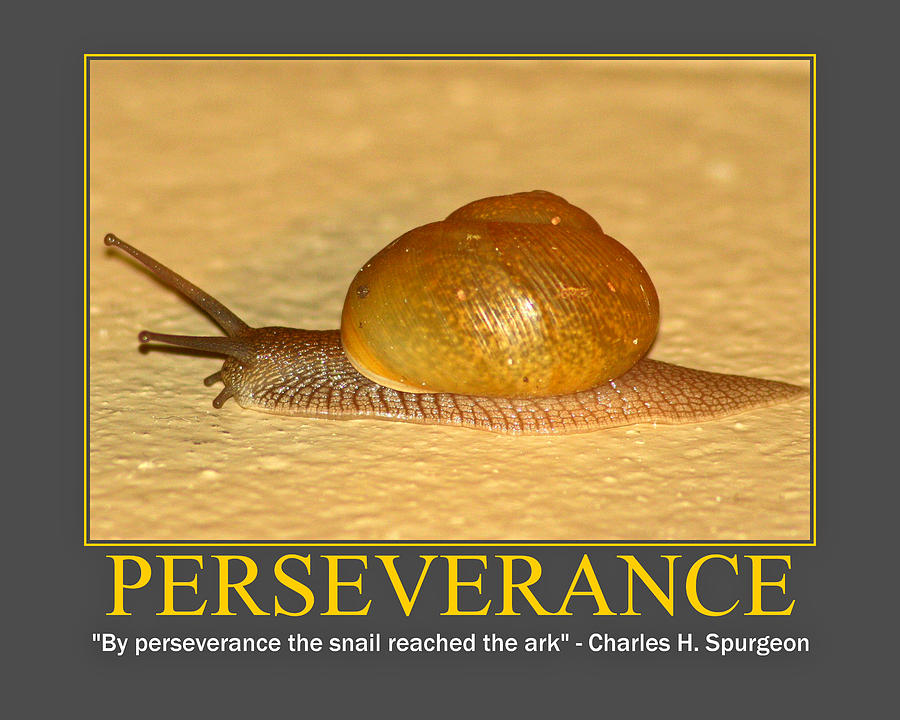
It first started with a conversation that Luke and I had with friends as we celebrated the new year midnight hoohaa. I was asked by one of them what my word was for the coming year. What he meant by this is what do I really want to focus on with God over the next 12 months. I came up with perseverance.

I want to persevere with relationships with friends that have left college and I don't see on a daily basis. I want to persevere with my study and get my Masters degree. I want to persevere with my marriage and continue to grow with Luke. I want to persevere with my relationship with God and learn more about the wonder of the Trinity. I want to persevere in my preaching and look for more opportunities to preach and serve at church. So perseverance became the word for this year.

So I have been praying that God would teach me more about perseverance and give me opportunities for me to grow in that area.

To let you understand the enormity of what comes after this you need to know something about me.

I love the spotlight.

I love to stand up in front of people and preach. I love being the centre of attention. I love telling people what I think and why I think it. As Eminem is to rap, I want to be Preacher to the church. I have daydreams about standing in front of thousands and having them convert and praising God/Me because of my words.

It's a problem. Humility has never been my strong point.

So over the last couple of months I have been thinking of what to do next year. My ideas ranged from getting a scholarship to do my PhD at Oxford University, while writing a thesis that changes the face of theology, to becoming the youngest ever and first female principle of Laidlaw College. I also thought about going overseas and doing youth work, working with women in the sex industry, or becoming the next Joyce Meyer. There was just one problem,

Luke is in a band.

A Metal Band.

Don't get me wrong, I love the band. The boys in it are like family to me and I love that Luke is doing something that he loves and makes him happy. But a metal band in New Zealand isn't going to go anywhere fast, make any money, or even draw massive crowds.

In short, I wrote it off as a hobby that could be sacrificed to follow my dreams.

And then God started talking back.

I was sitting on a bus from Taupo to Auckland listening to Lecrae, a Christian rapper, and talking to God about the fabulous plans I had for my life that he should make work for me, when I realised how unbelievably selfish and self centred I was being. I wasn't interested in what God wanted for my life, I wasn't even thinking about how I could serve him. All I was thinking about was how I could get recognition. I didn't even consider the fact that God was using the band, had called the band members to it, and was working through them. I was thinking only about how God could serve my desires. 

I was God slapped.

And it hurt. 

I felt humiliated and ashamed that I had pushed my own agenda and wrapped it up in a bow called 'God's calling'. It took about 4 hours and everything I had planned for my life was broken.

I am a blind woman. I don't see the world as I should, but through the darkness of sin. I need to hold on the arm of my Saviour so he can lead me. And as he leads me he tells me about the world as he sees it. He describes the beauty and the glory, and he weeps as he tells me of the brokenness. And all the time he leads me gently in the best path for my feet.

But I am stubborn. I don't want to be lead, I want to run ahead. So I do. I leave the safety of his arm and walk by myself, even though I fall in potholes and trip on rubbish. I try to tell him what the world looks like by the limited things I can feel and foolishly believe that this proves that I am not even blind, that I can see just as well as he.

I am a blind woman. God give me sight.

Perseverance is a word heavy with the implication of struggle. I struggle with myself and my own ego daily. If I really do want to follow God and preach the Word then why am I not doing it right where I am? Why does it need to be on a stage where people can see me and know who I am? 

We all have our own individual weaknesses that get us in a sneak attack and we don't even realise that we have shifted our gaze from God to ourselves. This is one of mine. I am still working through it, still praying about it, but I am so grateful that God made me aware of it! 

I will persevere, even against myself.

Wednesday, October 12, 2011

Which is the Question

I was told today that I should start a blog. Maybe it is due to the numerous questions I have running around in my brain, or maybe the person just didn't want me talking to them about them, but I have decided that this is an excellent idea. So here we are. I have called this blog 'the sober times' due to me a) being a recovering alcoholic and b) having a certified melancholic streak that causes me to regard the world very soberly. I plan to voice questions and musings here and to leave them open for discussion and debate so feel free to join in at any time.

I was contemplating the idea of dying for ones beliefs the other day (as one does in their spare time) and I was struck by the inherent stupidity of the idea. I mean does God really want us to die simply because we are too stubborn to lie? God would surely forgive us for lying in the face of death. Upon further reflection I realised that I probably could not reject my faith in the face of danger because I would be unable to live with myself after the fact if I did. To die or not to die, perhaps that is the real question.

And then it struck me; what did any of this hypothetical conviction mean if it has no bearing on today? What I mean is, could I not tell by the way I lived in this moment whether or not I would lay down my life for the sake of the gospel? Am I prepared to die daily as it were? Though I would love to answer that with a resounding 'yes! My life is the model of self sacrificial piety' I think the truth is a little different. In Matt 6:8-9 Jesus tell his disciples to take nothing for their journey and to set out empty handed to preach the gospel. Now I am not saying that this is a statement meant to be taken literally for us (Paul for example had a job to support himself in his preaching ministry) but it bodes the question - if God said 'go' would I go? Or to put it another way, if God said 'die' would I die? Does my life reflect the passion and faith of Moses climbing the mountain with Isaac, or am I more of a Hebrew wandering the desert finding mouldy manna after I tried to collect too much out of my lack of faith?

Maybe the more pertinent question is not 'to die for Christ or not to die?' but rather 'to live for the gospel or not to live?'